Plena Libre Brings Panderos and Freedom to the Bayamón Correctional Complex
CoquiList · With information from El Nuevo Día
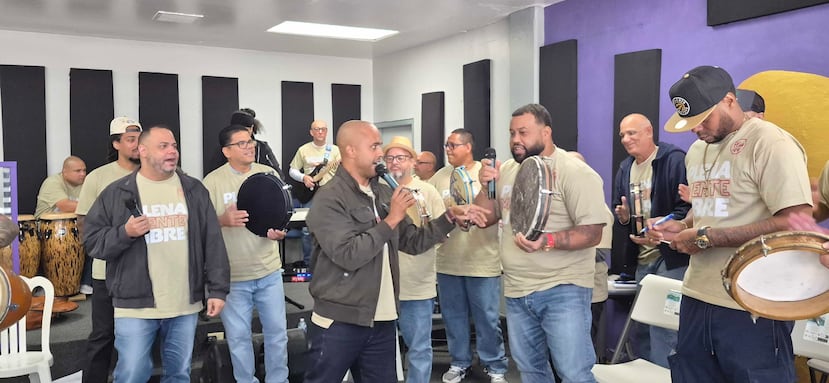
For seven weeks, a group of incarcerated men at the Bayamón Correctional Complex traded part of prison routine for the pulse of the pandero. Plena Libre, the Puerto Rican ensemble that has carried plena and bomba to stages around the world for more than three decades, went inside the facility to teach percussion, pandero technique and composition, closing out the program with improvisation sessions led by singer, songwriter and percussionist Emanuel Santana. According to El Nuevo Día's report, published September 29, 2026, participants found in the rhythm of plena and in improvisation a space of freedom and expression that incarceration otherwise denies them 1.
Background
Plena Libre was founded in 1994 and has spent its career restoring plena to prominence, a genre that for decades sat in the shadow of other Caribbean rhythms. The group has released 14 albums, collaborated with pianist Eddie Palmieri and flutist Néstor Torres, and performed at venues including Morocco's Fes Festival and the Playboy Jazz Festival at the Hollywood Bowl 2. Beyond the stage, the band has long maintained an educational arm: it offers artistic residencies, including a program for children called "Residency for Littles," and has served as artist-in-residence at the University of Chicago. Bringing a workshop into a correctional facility fits squarely within that mission of using traditional Puerto Rican music as a teaching tool, not just a performance 3.
The Bayamón Correctional Complex is one of the larger institutions in Puerto Rico's correctional system. Arts programming inside island prisons is not common, and when it happens, it usually depends on one-off efforts by cultural organizations or artists willing to go inside, rather than a structured policy from the Department of Corrections and Rehabilitation.
The facts and numbers
- Workshop length: seven consecutive weeks of instruction.
- Location: Bayamón Correctional Complex.
- Curriculum: percussion, pandero technique, composition and plena improvisation.
- Improvisation sessions led by: Emanuel Santana, a member of Plena Libre.
- Group's track record: founded in 1994, with Grammy and Latin Grammy nominations for Best Traditional Tropical Album in 2001 ("Más Libre"), 2003 ("Mi Ritmo") and 2006 ("Evolución") 2.
- Publish date of the report: September 29, 2026, by El Nuevo Día journalist Damaris Hernández Mercado 1.
What this means for you
This story matters beyond the music itself. It speaks to how Puerto Rican cultural heritage — the pandero, plena, bomba — can become a rehabilitation tool inside a correctional system that, like most, struggles with high recidivism and limited resources for education or therapeutic programming. For the participant quoted in the coverage, the workshop represented a space of freedom inside a place built to restrict it. For everyone else, it is a reminder that Puerto Rico's musical tradition stays alive not only at concerts and festivals, but in places almost no one is watching.
It is also a signal to people working in culture, social work or public policy: projects like this show that bringing art to vulnerable populations does not require massive infrastructure — it requires institutional will and artists willing to walk in where the press rarely goes.
How to do it / Checklist
- Follow Plena Libre at plenalibre.com and on social media for concert dates, public workshops and future educational residencies 3.
- If you have a family member incarcerated at Bayamón or another facility, ask the Department of Corrections and Rehabilitation's Sociopenal Services office about available educational, cultural or vocational programs.
- Listen to Plena Libre's catalog — including "Más Libre" and "Mi Ritmo" — to understand the plena and bomba tradition behind this kind of project 2.
- If you work with a cultural, community or educational organization, consider reaching out to the Instituto de Cultura Puertorriqueña or groups like Plena Libre to explore partnerships that bring similar workshops to other correctional institutions or community centers.
- Support groups that sustain traditional Puerto Rican music with your time, instrument donations or funding; many of these educational programs run on volunteer effort.
What comes next
El Nuevo Día's report does not specify whether the Bayamón workshop will be repeated or extended to other institutions in the correctional system, but Plena Libre's track record with educational residencies — from the University of Chicago to its program for children — suggests this kind of intervention is unlikely to be a one-off within the group's community catalog. It remains to be seen whether the Department of Corrections and Rehabilitation institutionalizes this kind of cultural partnership or whether, as has happened before on the island, it stays a one-time effort without guaranteed continuity.
Sources
- El Nuevo Día, "Plena Libre le enseña a tocar panderos e improvisar a los confinados de Bayamón," September 29, 2026. https://www.elnuevodia.com/entretenimiento/cultura/notas/plena-libre-le-ensena-a-tocar-panderos-e-improvisar-a-los-confinados-de-bayamon/
- Wikipedia, "Plena Libre" (history, discography, Grammy and Latin Grammy nominations). https://en.wikipedia.org/wiki/Plena_Libre
- Plena Libre official site, members, mission and educational/residency programs. https://plenalibre.com
Sources
CoquiList summary and local context. Read the linked sources for the original reporting.
Ask about this story
Ask anything about this article — in English or Spanish.
Log in to ask about this story.
Comments (0)
Log in to join the conversation.
No comments yet — be the first.